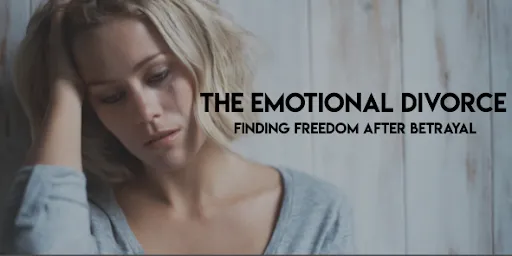
Emotional Divorce: Finding Freedom After Betrayal
When most people think about divorce, they think about the papers. The decree gets signed, assets divided, custody plans set. And while that part is necessary, it’s only one piece of the story. There’s another divorce that rarely gets talked about but is often even harder. It’s the emotional divorce.
An emotional divorce isn’t about documents. It’s about releasing the hold your ex and the marriage still have on your heart, your mind, and even your body. It’s about grieving what you thought would be, processing the pain of betrayal, and reclaiming your identity. Without it, you can be legally divorced but still feel stuck in the same emotional prison.
The Emotions of an Emotional Divorce
So what emotions are we really talking about?
Grief. Not just grieving the person, but grieving the life you thought you were building. The family dinners, the shared future, the dreams that felt so certain. It is grieving the “us” you thought you had and realizing you are left to carry the pieces on your own.
Anger. Anger at the betrayal, at the lies, at the destruction left behind. Anger at the way you have to pick up the pieces while he seems to move on untouched. Anger that what happened is unfair and undeserved, yet you are the one carrying the weight.
Sadness. The ache of mourning the years you gave, the energy you poured in, and the parts of yourself you may have lost while trying to hold it all together. It is the sadness of remembering how hard you tried and realizing that no amount of effort could have fixed what he chose to break.
Fear. Fear of stepping into a future you did not plan for. Fear of being alone or never being truly seen and loved. Fear that you might miss the red flags again, or worse, that you will never trust yourself to see them.
Confusion. The endless question of “How could he?” How could someone you loved so deeply cause this much pain? How could what felt real to you have been so different for him? And underneath it, the confusion of wondering if you can even trust your own instincts anymore.
Resentment. That heavy feeling that sits in your chest because he will not own what he did. There is no apology, no accountability, no acknowledgment. And so you carry the resentment of being left with the fallout of choices that were never yours.
These are all part of the emotional landscape after betrayal and divorce. And they don’t just fade because the court says the marriage is over.
Why Emotional Divorce Matters
Without emotional divorce, you can feel trapped long after the relationship has ended. Maybe you catch yourself still thinking about what he’s doing, comparing your life to his, or waiting for him to finally show up differently. Maybe you still feel defined by the marriage, by what happened, or by the role you played in holding it all together.
When you stay emotionally tied, your nervous system stays on high alert, replaying old patterns and bracing for hurt that isn’t even happening anymore. Your mind keeps looping through unfinished stories, searching for closure you may never get. And your heart struggles to trust again because it’s still holding onto what was lost.
Emotional divorce matters because it’s the part of healing that actually gives you freedom. It’s how you stop carrying him around in your head and body. It’s how you start to feel like yourself again.
Why You May Still Feel Stuck
If you’ve ever wondered, “Why don’t I feel free yet?” here are some common reasons:
Unmet expectations. Maybe part of you is still waiting for him to apologize, to acknowledge the harm, or to step up as the parent or partner you hoped he would be. Every time those expectations aren’t met, you feel disappointment all over again.
Unanswered questions. Betrayal leaves gaps, and your brain wants to fill in the missing pieces. That unfinished story keeps you hooked.
Attachment injuries. When the person who was supposed to be your safe place is also the one who hurt you, your attachment system gets scrambled. It can keep you pulled between anger and longing for closure.
Identity loss. You may still be defining yourself in relation to him — as his wife, his ex, or the betrayed partner — rather than as your own whole person.
Fear of moving on. Sometimes staying emotionally tied feels safer than stepping into the unknown. At least you know this pain, even if it isn’t where you want to stay.
How to Begin Your Emotional Divorce
So what does it actually look like to emotionally divorce and step into freedom? Here are some places to begin:
See the ties. Start by noticing where you’re still hooked. Do you replay arguments in your head? Do you compare your life to his? Do you feel consumed by disappointment when he doesn’t show up how you hoped? Seeing the patterns is the first step in loosening them.
Release expectations. This may be the hardest part. Freedom often comes when you stop expecting him to be different. When you let go of the fantasy that he will change, apologize, or repair the past, you stop setting yourself up for fresh disappointment.
Feel your feelings. An emotional divorce isn’t about being “over it.” It’s about allowing grief, anger, sadness, and fear to move through you instead of getting stuck. The more you allow yourself to feel, the less those emotions control you.
Rebuild self-trust. Betrayal makes you question yourself. But healing happens when you start trusting your own instincts again. This can be as simple as keeping small promises to yourself or pausing before reacting so you know you’re choosing from clarity, not fear.
Redefine your identity. You are more than a wife, an ex, or someone who was betrayed. Emotional divorce is about rediscovering who you are now — your values, your passions, your voice. Freedom is found in becoming the truest version of you.
The Freedom on the Other Side
Emotional divorce isn’t quick or easy. It takes time, courage, and a lot of grace with yourself. But it’s also the part of divorce that leads to real empowerment.
When you stop waiting for him to change, when you stop carrying his choices inside your own body, when you start living from your own values instead of reacting to his — that’s when you feel free. That’s when you step out of survival mode and into the life you get to create for yourself.
Your ex may never change. The betrayal can’t be undone. But your healing, your peace, and your freedom do not depend on him. They depend on you.
If this resonates with you, I go deeper into this conversation on my podcast, The Empowered Divorce Podcast, where I share more stories, insights, and tools to help you walk the path of emotional divorce. And if you’re ready for support in doing this deeper work, this is what I help women with every day.
Because you are the creator of your life, and you get to create the life you want, because you can.
XO,
Amie Woolsey
Certified Brainspotting Practitioner,
CPC, PCC, APSATS-CPC


